

Jia Fu
Moderator
CISO and cyber security leader. Moderated the morning panel and hosted the day at BFI Stephen Street.
· BFI Stephen Street · London
A record of Signal Sessions 5, and the clearest answer we can give to what a Signal Session is actually like. Senior security leaders, one room and a day spent on the decisions they are really making.
Completed · By invitation · Chatham House Rule
There was a programme. There was never a script.
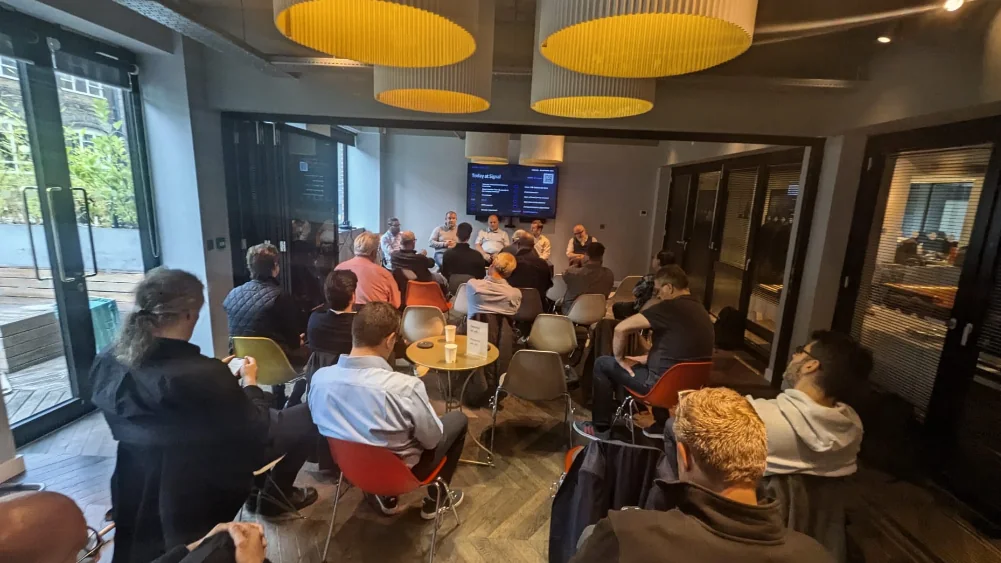
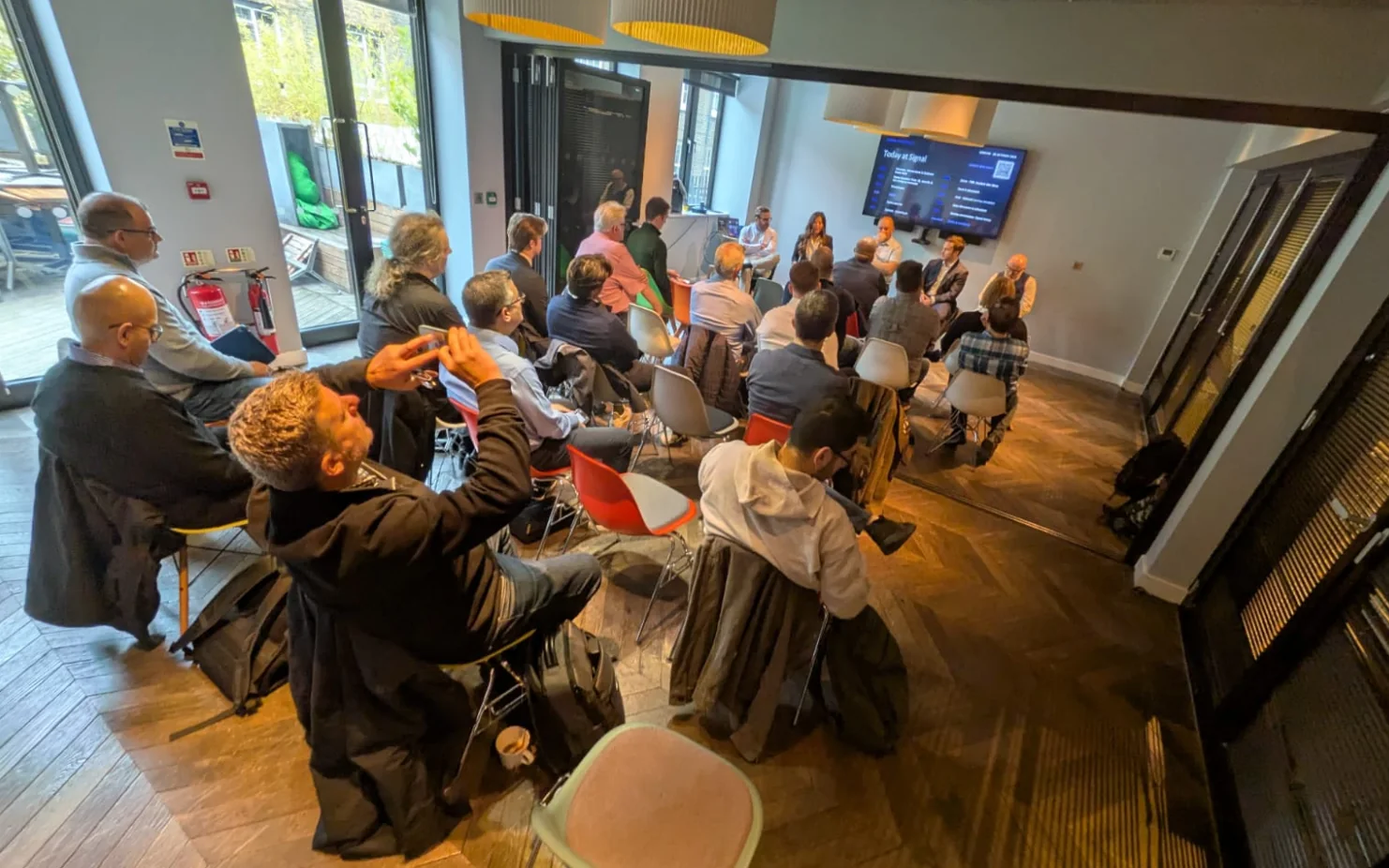
Signal Sessions 5 ran to a timetable at BFI Stephen Street, with prepared sessions and three partner contributions. What made it a Signal Session is that the discussion belonged to the room: senior practitioners talking to each other about live problems, rather than sitting through a succession of sales presentations.
The Chatham House Rule applied throughout, so this page records what the day covered and who contributed to it. It does not report who said what. Everything below came back through the feedback form afterwards, and names appear only where the person said we could use them.
01What the room really thought
It’s not corporate, it’s not businessy. It’s open and frank.
Worth its weight in gold.
Met a lot of nice people and gained great insights into the market from other security professionals.
I enjoy the panel discussions as many times people tackle the same challenges in different ways, so gives a broad scope to help define my own approach to the challenge.
Six things came back more than anything else. These are summaries of what people told us, not quotations, because those respondents did not ask to be named or quoted.
02What the room talked about
The main discussion began by asking how organisations are actually using AI to streamline security. Not how they intend to. Not how they describe it to a board. What is genuinely running.
Around the panels, the day made room for the human side of security with Signal CyberPsych, for a knowledge share on incident response and lessons from the field, and for three partner contributions, each declared as such.
Different perspectives. Shared challenges. Practical ideas.
Security leaders rarely face challenges with simple answers. Signal brings together people tackling similar problems in different ways, creating conversations that help everyone think differently and take practical ideas back to their organisations.
These are the themes documented in the agenda for the day. Nothing on this page is a quotation from the room, and no view is attributed to anyone in it.
03The people
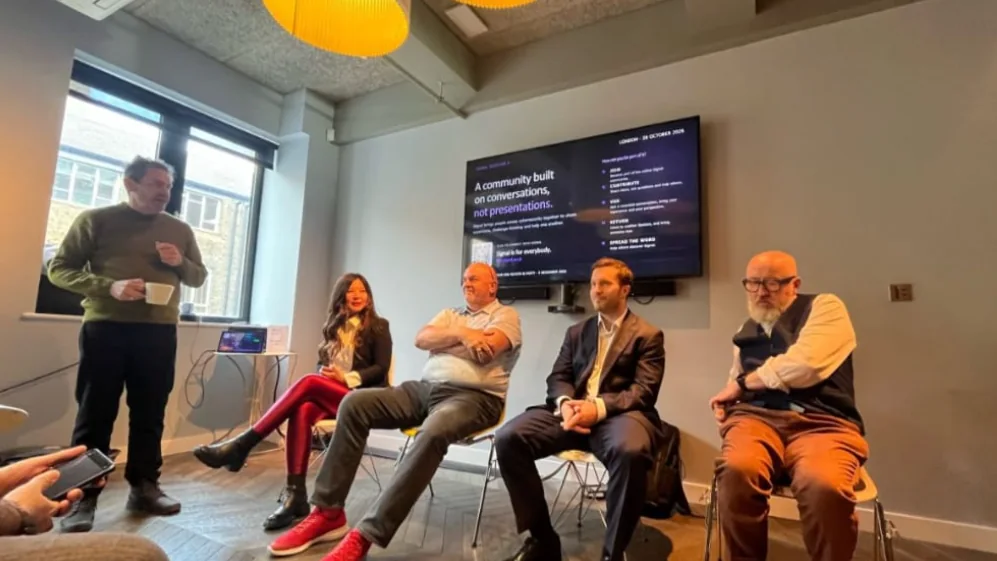
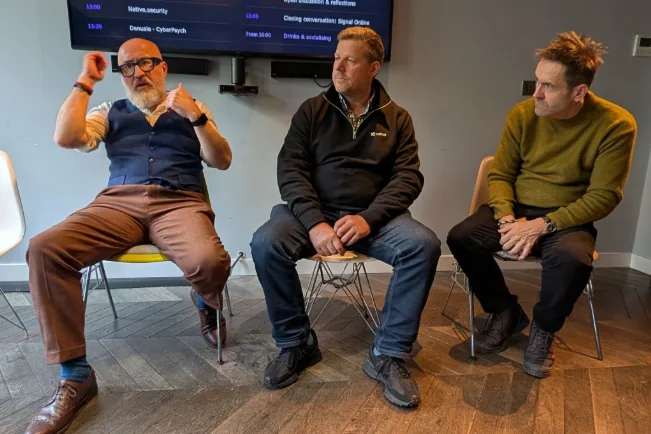
A moderator, a panel of four, an afternoon panellist who also presented his own project, and two sessions brought by people in the room. Hosted by Vin Marc Maguire, founder of Signal.
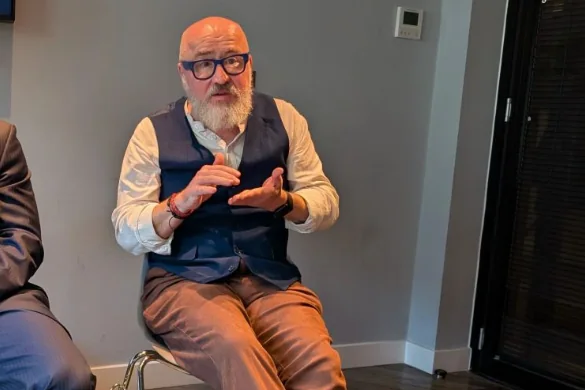
Moderator
CISO and cyber security leader. Moderated the morning panel and hosted the day at BFI Stephen Street.

Panel
Senior information security leader, working in global exposure management. Brought a practitioner’s perspective to the open conversation: cybersecurity challenges, judgement and sharing experience across organisations.
Panel
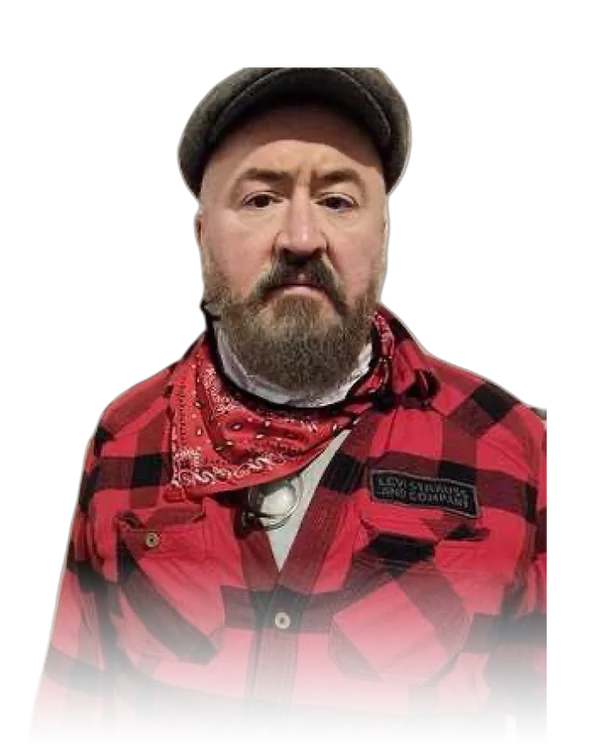
Cyber security architect and transformation leader, with experience building secure banking environments from the ground up. Co-host of Signal Vox.

Panel
Security operations leader, bringing the view from the operations floor. A guest on episode 2 of Signal Vox.

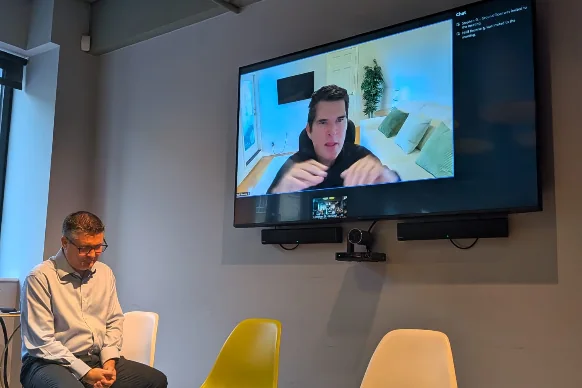
Afternoon panel · contributor
Joined the panel in the afternoon and presented his own project to the room.

Signal CyberPsych
Human risk and security culture. Brought the behavioural side of security into the room: why people act as they do, and what psychological safety changes.

Knowledge share
Cyber security mentor and trainer. Knowledge share: incident response and lessons from the field.
Panel
Cyber security portfolio lead, bringing an enterprise technology leadership perspective that connects security to the practical realities of running and supporting business technology.
04You said. We listened.
None of these came from us. All four came back through the feedback form, and nobody who suggested them asked to be named.
The best ideas will not always come from the stage. They will come from the room.
Each contributed a declared partner session, and none had any influence over what the room chose to discuss.
Thanks to Jia Fu and the team at BFI Stephen Street.
Online, inside Signal Online
An online return to the themes from London, open to the people who were in the room and the people who were not.
Details to follow.
Tiny Rebel, 25 Westgate Street, Cardiff CF10 1DD
The same format, a different room. Moderated conversation under the Chatham House Rule, for security and risk leaders across Wales and the South West.
BFI Stephen Street, London
Not a panel. A facilitated critical thinking session on a real problem, then an evening together. The last Signal room of 2026.
Sessions are by invitation and deliberately small, so everyone contributes and nobody disappears into an audience. Cardiff is next, then the London Year-End.
Partners take part in the room rather than present at it. No exhibition hall, no bought agenda, no captive audience. What a partner gets is the opportunity to contribute expertise, build trusted relationships and take part in meaningful conversations with the cybersecurity community. Signal does not sell access to its members.
This is the agenda the day was built on, and a fair example of how a Signal Session runs. Timings moved as conversations ran long, which is usually a good sign rather than a bad one.
Chatham House Rule throughout. What was heard may be used. Who said it may not be repeated. Attendance is deliberately limited and the room carefully curated, so everyone contributes and nobody disappears into an audience.
That was the day. What happens next is shaped by the people who were in the room. Tell us what worked and what did not. If you would like to keep the conversation going, you can ask for an invitation to Signal Online at the same time.
Your feedback is used to run Signal better. Nothing here is assumed: we invite you, quote you, or send you updates only if you ticked the box asking us to, and you can change your mind by emailing vin@signalsessions.co.uk. Ticking nothing is a complete answer. See the privacy notice.
The room was ours for a day. The conversation belongs to the people who were in it.
Signal Sessions 5 BFI Stephen Street, 21 Stephen Street, London W1T 1LNSignal Online is where the room carries on between Sessions, and a good deal of the reflection on the day happened in public, in people’s own words.